




Introduction


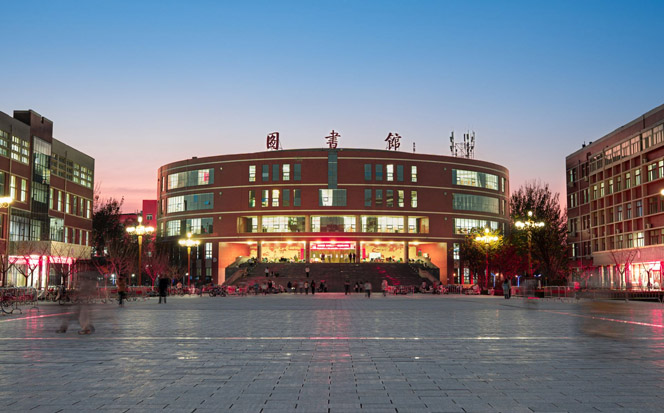
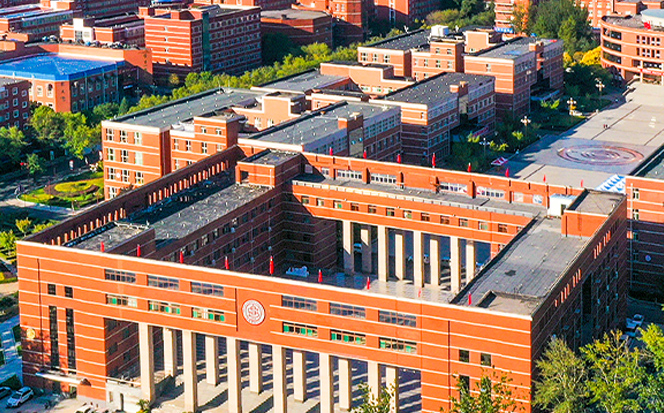
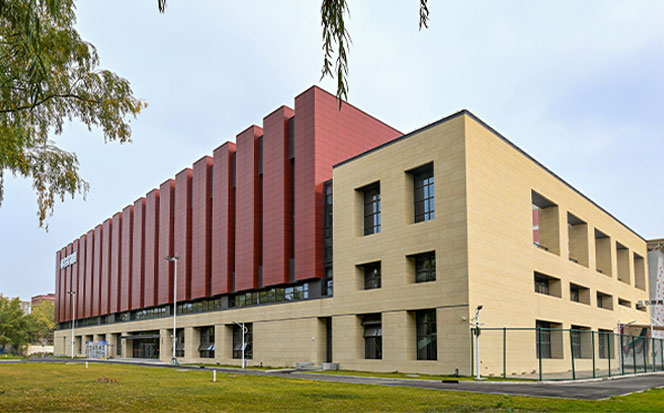
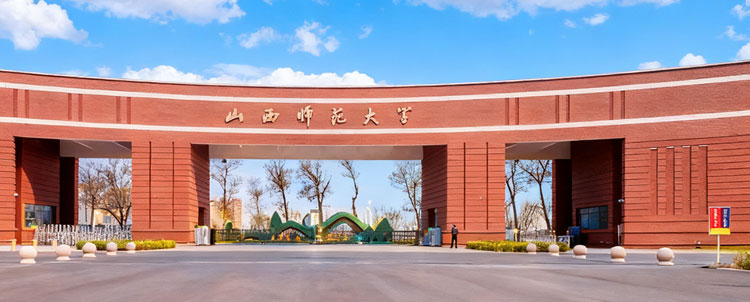
Founded in 1958 as Jinnan Normal Junior College, the institution was upgraded to Shanxi Normal College in 1964 and renamed Shanxi Normal University (SXNU) in 1984. It became a master’s degree-granting institution in 1990, merged with Shanxi Vocational Normal College and the independently run Institute of Physical Education of Shanxi Normal University in 1999, and was authorized to confer doctoral degrees in 2006. In 2021, the university relocated from Linfen to Taiyuan. Upholding the fine traditions of teacher education and continuously reforming its pedagogical model, SXNU has grown into a key provincial university with a comprehensive range of disciplines and a complete and distinct undergraduate–master’s–doctoral training system. It serves as a principal base for training basic-education teachers in Shanxi Province, and is designated for the development of First-Class disciplines under the Double First-Class Initiative, a key participant in the provincial 1331 Project for higher-education quality enhancement, and a beneficiary of the provincial Ten-Billion-Yuan Higher Education Project for developing high-level universities. It is also included in the Ministry of Education (MOE)’s Teacher Education Collaborative Enhancement Initiative.
SXNU is committed to fostering virtue through education and improving the quality of talent cultivation. It currently enrolls 22,558 undergraduates and 4,286 postgraduate students across 22 schools and 59 undergraduate programs. Among these are six national-level characteristic majors, 14 national first-class undergraduate program development sites, one national comprehensive major reform pilot, and 15 national first-class undergraduate courses. At the provincial level, it offers six superior majors, 10 branded majors, six characteristic majors, 18 first-class undergraduate program development sites, and 49 accredited first-class undergraduate courses. The university has received four National Teaching Achievement Awards and 71 Provincial Teaching Achievement Awards, and undertakes national projects such as the MOE’s Outstanding Teacher Training Reform Program, the national innovative and experimental zone for talent cultivation models, and the national off-campus field education base. It operates 10 provincial experimental teaching demonstration centers, one provincial top-tier talent cultivation base in basic disciplines, three provincial model characteristic schools, and eight provincial outstanding (top-tier) talent cultivation reform pilots. It was the first university in Shanxi to pilot government-subsidized teacher education and participates in the provincial Outstanding Teacher Program. To date, it has produced over 400,000 graduates in various fields, with graduate employment rates consistently ranking among the highest in the province.
To boost its strength in human resources, SXNU has established an integrated mechanism for talent recruitment, cultivation, employment, service, and recommendation, striving to build a high-caliber faculty. It employs 2,048 staff members, including 1,526 faculty. Distinguished scholars include two Chang Jiang Scholars, two recipients of the National Science Fund for Distinguished Young Scholars (Class A), two national-level leading talents in the National Special Support Program for High-Level Talent, one Young Chang Jiang Scholar, one recipient of the National High-Level Young Talent Program, four candidates for the National Hundred and Thousand and Ten Thousand Talent Project, five recipients of the MOE’s New Century Excellent Talent Support Project, two National Outstanding Teachers, one National Model Teacher, two National Cultural Celebrities and “Four Batches” Talents, five Sanjin Talents, and over 240 provincial-level awardees. In addition, the university has flexibly recruited 36 academicians of the Chinese Academy of Sciences and Chinese Academy of Engineering, Chang Jiang Scholars, and recipients of the National Science Fund for Distinguished Young Scholars (Class A and B).
Taking discipline development as the cornerstone, the university focuses on teacher education while pursuing a balanced development philosophy of “equal emphasis on social sciences and natural sciences, distinctive teacher education features, interdisciplinary integration, and engineering expansion.” Its “7+10+X” discipline echelon system includes seven first-level doctoral programs, three mobile postdoctoral stations, 21 first-level master’s programs, seven provincial key disciplines, 14 disciplines under key provincial support, and 19 professional master’s degree categories. Its discipline Chemistry ranks within the global ESI top 0.5%, and Theatre and Film Studies has ranked 6th nationwide for five consecutive years in the ShanghaiRanking. SXNU is vigorously developing research platforms. It is home to one MOE Key Laboratory, one National Language Promotion Base, one Shanxi-MOE Collaborative Innovation Center, one MOE Traditional Chinese Culture Inheritance Base, three Provincial Key Laboratories, three Provincial Engineering Research Centers, one Provincial Technological Innovation Center, and four Provincial Key Research Bases for Humanities and Social Sciences, with 40 projects approved under the 1331 Project.
The university’s scientific research strength has grown year on year. In recent years, it has undertaken over 740 research projects, including the National Key R&D Program, the 973 and 863 Programs, general research projects and young-scholar-led projects under the National Social Science Fund and the National Natural Science Foundation, as well as various provincial-level research initiatives, with total funding exceeding 360 million yuan. The university has published nearly 2,500 high-quality academic papers, including over 1,800 SCI-indexed papers in natural sciences, and has generated revenue from the commercialization of 57 research outcomes. It has won 14 MOE Humanities and Social Sciences Awards and over 200 prizes such as the Shanxi Provincial Humanities and Social Sciences Award and the Scientific and Technological Progress Award. The university hosts 11 national and provincial/ministerial-level teams, including MOE-designated technological innovation teams, provincial key technological innovation teams, and national and provincial teaching teams.
SXNU is committed to open operation and serving Shanxi’s socioeconomic transformation. It has launched a project to pair up its schools and institutions with counties, enterprises and government agencies to elevate collaboration with local governments, enterprises, and other academic institutions to a higher level. The university publishes several newspapers and journals with wide influence both domestically and internationally. Among them, Zhonghua Xiqu (Chinese Opera) is highly regarded in opera and theatre circles worldwide; Yuwen Bao (Chinese Language) is honored as “China’s Premier Chinese Language Newspaper” and has been recognized as a “China Well-known Trademark,” while English Weekly boasts a peak circulation of 16 million copies per issue, ranking first nationally among supplementary newspapers, and is acclaimed as “China’s Leading English Learning Newspaper.” The university has established cooperative ties with over 40 universities and educational institutions in countries and regions including the United States, the United Kingdom, Japan, Singapore, and Hong Kong. It runs a “3+1+1” joint undergraduate-master’s training program with the National University of Singapore and co-organizes the Huang Kun Elite Class with the Institute of Semiconductors of the Chinese Academy of Sciences.
SXNU has comprehensively strengthened Party building and ideological-political education. One school/department is recognized as national model in Party building. The university has four national model Party branches. It is the lead unit for the MOE’s Integrated Curriculum Community for Ideological and Political Courses in Primary, Secondary, and Tertiary Education Institutions. The School of Marxism is designated as one of the first key Marxist schools in the province. Two student societies have ranked among the top ten “Best Student Societies” nationwide. Nationally recognized brands of Party building and ideological-political work have emerged, such as the “236 Party Branch,” the “University Student Presenter Group of Communist Theories,” and the “Learn from Lei Feng” Volunteer Group. The university has been honored as a National Model Unit for Teacher Ethics and Professional Conduct, a Model Unit for Civilized and Harmonious Institutions in Shanxi Province, and a Demonstration Unit for Clean and Honest Campus in Shanxi Province. Its social practice activities for students have been commended for many consecutive years by the Publicity Department of the CPC Central Committee, MOE, and the Communist Youth League Central Committee.
Looking ahead, guided by Xi Jinping Thought on Socialism with Chinese Characteristics for a New Era, SXNU will adhere to the Party’s education policy and the fundamental task of fostering virtue through education. Committed to nurturing talent for the Party and the country, it will comprehensively advance the development of a regionally first-class normal university with distinct teacher education characteristics and national influence, striving to make greater contributions to the development of Shanxi, the building of a great country, and national rejuvenation.
(Data as of September 2025)